At the very start of the project, we conducted a baseline survey to understand the community’s situation. Traditionally, survey results are shared in formal dissemination meetings: guests arrive, listen politely to presentations, eat and then leave. But we wanted something different—an experience that the community would own, remember, and act upon.
So we sat with a few community members and asked: How would you like to share these findings with your neighbors? Their answers surprised us.
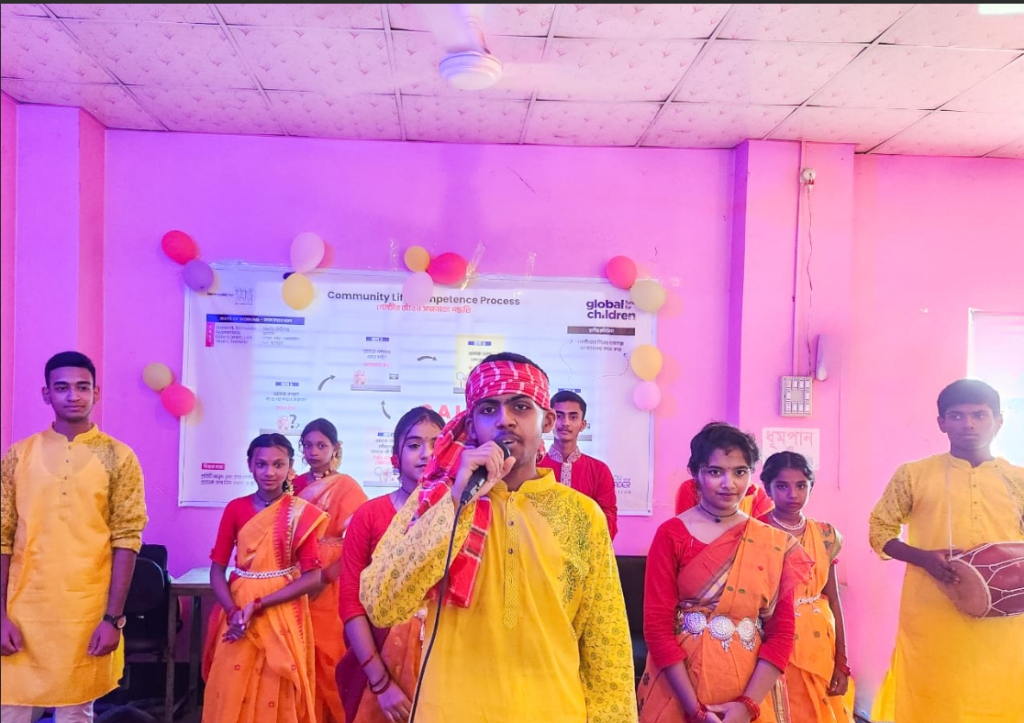
On June 6th, 2024, ten adolescents—four boys and six girls from grades 9 and 10—chose to present the findings through Jarigan, a traditional folk song. For the first time, girls performed alongside boys. They wrote the lyrics, composed the melody, and practiced together until their voices blended as one.
Community Led Dissemination
That day, as they stood before their community—110 people including educational institutional heads, School Management Committee (SMC), local government representatives, religious leaders, and parents—the performance felt magical. Eyes lit up, people leaned forward, and pride filled the air. What might have been a dry report became an experience of joy, ownership, and awakening. These were not statistics written on a page—they were living concerns voiced by parents, grandparents, and young people themselves.
The outcomes were profound: the findings became the community’s own story, sparking trust and ownership. People recognized their priorities and suggested practical actions to strengthen family unity, guide youth, and reduce negative influences. Youth, women, and previously unheard voices were amplified, creating a new space for dialogue and collective problem-solving that continues to grow.
This dissemination was different because the community—not outsiders—owned and shared the findings, turning data into a living, actionable story that inspired immediate reflection and action.