
The Story of Hijlipara
In Hijlipara, the community came together and spoke honestly:
“Our children are addicted to mobile phones. They don’t study after school. They don’t play outside. Why is this happening?”
As the conversations deepened, they discovered that mobile addiction was not the root problem—it was only a symptom. The real issue was a lack of unity among community members. Because people were not working together, parents struggled alone to guide their children. Quality tutors were located far from their homes, making parents hesitant to send their children, and playgrounds were also distant, so children rarely had the chance to play outside. This left children isolated, turning to mobile phones to fill their time.
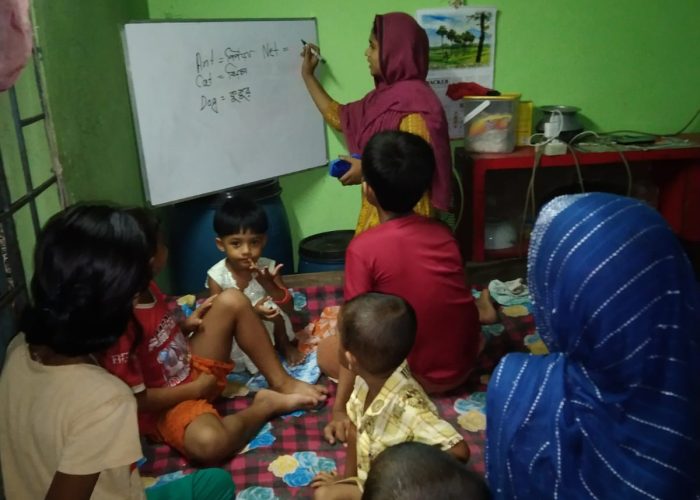
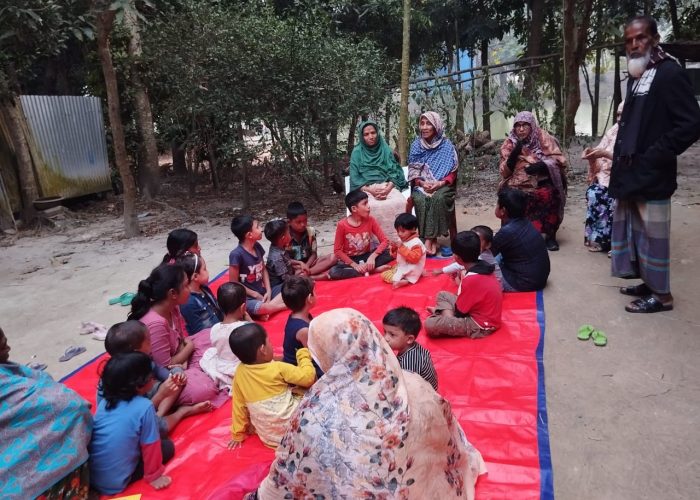
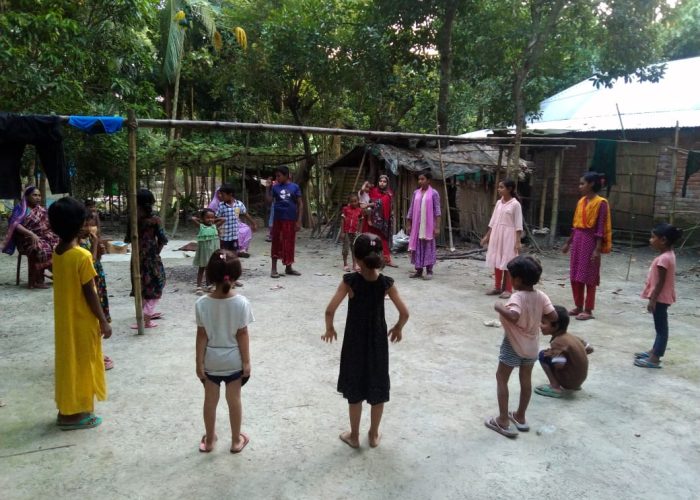
Instead of blaming one another, the community began to focus on their strength to rebuild unity. Educated mothers stepped forward and proposed creating small afternoon learning groups to teach and guide children together. Others suggested organizing group play sessions to reintroduce their childhood traditional games and bring children back to the fields. Even grandparents joined in, offering to gather the children twice a month to share stories and folk tales, strengthening bonds across generations. They named this gathering as “Grandparents Story-Telling Session”. This storytelling session not only ensured intergenerational bonding but also became a meaningful and joyful way for grandparents to spend their time. In this storytelling session, children not only listen to stories from their grandparents but are now also encouraged by their mothers to read storybooks everyday from the community library they initiated as part of this storytelling initiative. At first, only 9 households participated in these initiatives, but as trust and enthusiasm grew, the number of participating households increased to 22. A total of 59 members from 22 households engaged in this initiative. From this process, the community realized that by coming together, they could solve challenges that felt impossible alone.
Today, the change is visible: mobile phone usage dropped by 0.5 hour and study time increased by 0.4 hour daily. And families feel proud—not just of the solutions they created, but of the stronger unity that made those solutions possible. This is the heart of SALT-CLCP: communities recognizing their own strengths, dreaming together, and acting as one. Here is the pictures of their activities:
Community-led Library
Grow Your Reader Foundation (GYRF) implements a variety of library initiatives to promote reading among children, including mobile libraries, street libraries, conventional libraries, and online libraries. The mobile library, named Wheels of Wisdom (WOW), operates as a three-wheeler van that travels to remote areas, lending books directly to students. The van is managed entirely by a librarian who also serves as the driver. The Books Garage, GYRF’s street library model, consists of open-access book installations placed in public areas such as roadsides and parks. While these are intended to function on a “take one, leave one” basis—as indicated by the message displayed on each unit—GYRF volunteers often find the boxes empty and must refill them weekly. In all these models, GYRF identifies the locations, initiates the setup, and oversees ongoing operations and maintenance.
However, the case of Hijlipara Byaspur unfolded quite differently and represents a unique, community-led approach. In this village, it was the grandparents who began organizing storytelling sessions for local children. When they had told all the stories they knew, they noticed the children becoming disinterested due to repetition. Recognizing the need for new stories, they proactively approached GYRF with a request to borrow a few books to enrich the storytelling sessions. GYRF responded by lending 50 Bangla storybooks, and within a month, the community shared that the children had already read all of them. Demonstrating initiative, the grandparents and other community members began sourcing books on their own in addition to those provided by GYRF.
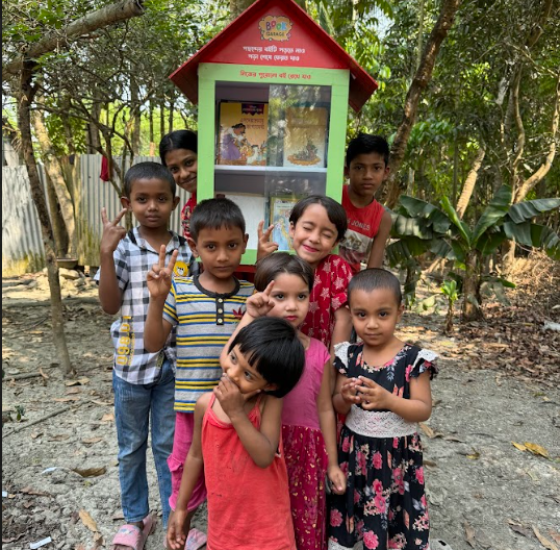
Impressed by their commitment and the responsible return of 50 borrowed books in excellent condition, GYRF decided to install a library in Hijlipara. Unlike in other areas, the residents took full ownership of the facility. Grandparents, parents, and children jointly manage the library, caring for the books with exceptional attention and affection. Sufia Begum, the grandmother who first started the grandparents’ storytelling initiative, is essentially the main person in charge of the library. Anyone who wants to borrow a book must seek her permission, and everyone respects her authority. She knows the total number of books in the library, and children usually return them to her on their own. Her daughter-in-law, Afsana, also helps collect books if someone forgets to return them. Although there is no formal register, she gives a gentle reminder every evening for anyone who has finished reading to return their books. Children not only engage with the library during storytelling sessions but also read regularly in their free time.
During the rainy season, community members even move the books into their homes to protect them from damage, despite the library’s built-in weather protection. This initiative is marked by a deep sense of ownership, love, and usefulness felt by the community, particularly in how they safeguard and value the library as a vital resource for their children.
Newsletter

Join our mailing list to keep up-to-date on the centre news.